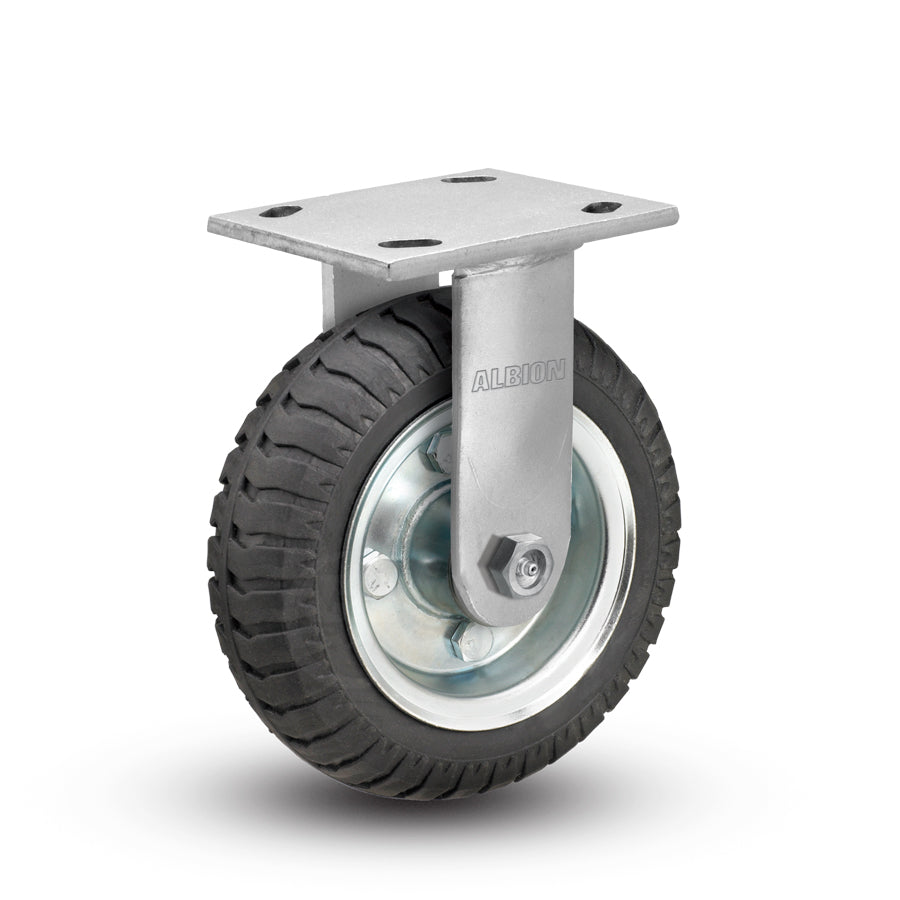
Pneumatic

Air-filled pneumatic casters cushion loads over rough terrain, gravel, grass, and expansion joints where rigid wheels would jar equipment and damage sensitive cargo.

Filter products

The highest price is $296.45
$
$

19 Products

Shock Absorption and Terrain Capability

Pneumatic casters use air-filled rubber tires to deliver a level of shock absorption and terrain capability that no solid wheel can match. Designed for outdoor use, rough surfaces, gravel, cracked pavement, grass, dirt, and uneven warehouse floors, pneumatic wheels absorb impacts and vibrations that would jar loads and stress equipment on rigid casters. Individual casters support 200 to 600 lbs, making them ideal for landscape carts, construction site material handling, outdoor event equipment, agricultural implements, and any application where rolling over unpredictable surfaces is part of the job.

Frequently Asked Questions About Pneumatic

Pneumatic casters are designed for surfaces that challenge or defeat solid wheels: gravel, cracked or broken pavement, dirt, grass, sand, mud, uneven concrete, expansion joints, door thresholds, and rough outdoor terrain in general. They also provide a noticeably smoother ride on indoor surfaces with significant imperfections, such as older warehouse floors.

Pneumatic casters in our catalog support 200 to 600 lbs per caster. The air-filled design trades maximum load capacity for superior shock absorption and terrain capability. For heavier loads on rough surfaces, consider foam-filled (flat-free) casters, which offer higher capacity with some shock-absorbing benefit, though less than true pneumatic tires.

Pneumatic casters absorb significantly more shock and handle rough terrain far better than solid rubber. Solid rubber casters carry higher loads, require no air pressure maintenance, and are immune to punctures, but they transmit much more vibration and perform poorly on loose or uneven ground. Choose pneumatic for outdoor, rough-surface, and terrain-intensive applications; choose solid rubber for smooth indoor floors where load capacity and zero maintenance are priorities.

Yes. Pneumatic casters require regular air pressure checks (monthly at minimum, weekly under heavy use) and inflation to the manufacturer's recommended PSI. Under-inflation causes premature tire wear, increased rolling resistance, and reduced load capacity. Tires and inner tubes may need replacement over time, especially in environments with sharp debris. This maintenance tradeoff is the cost of superior shock absorption and terrain performance.

Pneumatic Casters: Air-Filled Wheels for Outdoor and Rough-Terrain Applications

The air cushion inside a pneumatic tire conforms to surface irregularities in real time, distributing load forces across a larger, constantly adapting contact patch. This protects fragile cargo, reduces operator fatigue on long pushes across uneven ground, and prevents the jarring, bouncing motion that makes rigid casters impractical outdoors. The wide, compliant tread also provides excellent traction on loose or soft surfaces where hard wheels would dig in or skid, keeping carts stable and mobile in conditions that stop other caster types cold.

Pneumatic casters do require periodic air pressure checks and occasional tube or tire replacement, more maintenance than solid wheel alternatives. They also have lower load capacities than rigid wheels of the same diameter and are not suited for high-speed towing or environments with sharp debris that could puncture the tire. For applications that demand true all-terrain mobility and a smooth ride over rough ground, nothing outperforms a pneumatic caster. Browse our selection by wheel diameter, load rating, tread pattern, and mounting type.

Get the Latest Insights in the Material Handling Industry

  • How to Choose the Right Caster Wheels for Every Flooring Type

    Choosing the right caster wheels for your floor type protects your surfaces and ensures long term durability. This guide covers wheel material, load capacity, and configuration to help you select...

    READ MORE
  • Choosing the Right Caster for Your Application: A Step-by-Step Guide

    Choosing the Right Caster for Your Application: A Step-by-Step Guide

    Picking the right caster can make or break the performance of your equipment. The wrong caster can lead to damaged floors, employee strain, or even costly downtime. The good news?...

    READ MORE
  • Custom Caster Solutions: Turning Unique Challenges Into Smooth Moves

    Custom Caster Solutions: Turning Unique Challenges Into Smooth Moves

    No two applications are exactly alike—and that’s where custom caster engineering shines. When off-the-shelf solutions can’t handle your environment, load, or mobility needs, a custom caster can deliver the perfect...

    READ MORE
  • The Science Behind Polyurethane Wheels: Strength, Safety, and Longevity

    The Science Behind Polyurethane Wheels: Strength, Safety, and Longevity

    Polyurethane wheels are the unsung heroes of industrial movement. From manufacturing floors to medical equipment, polyurethane has become the go-to wheel material because of its perfect balance of strength, shock...

    READ MORE

Need Help with Your Pneumatic Order?

Visit the resources linked below including everything you need to get you started!

Caster Stem Size

Techniques for measuring grip ring stems, grip neck stems, threaded stems, and hollow kingpin stems to ensure accurate ordering.

Read Now!

Caster Sizing Guide

Get precise measurements of top plate dimensions, bolt hole patterns, and spacing to ensure proper mounting and installation.

Calculate Now!

Caster Load Calculator

Calculate the proper load capacity needed for your casters to ensure safety and longevity.

Calculate Now!